Reaching the Midpoint of the Outline

We’re still balancing work life and family life and writing life in trying to finish our outline.  I’m sure this is never an issue for you (ducks as you hurl projectiles at my head), but it’s constantly something we all need to juggle as we try to conjure up things creatively.

I’m a big believer that a well-balanced life makes for a well-balanced writer.   If all you know if your work life or family life, that’s going to be reflected in your writing, as your world experience tends to color your writing style.  Maybe you’re the exception, maybe you can handle 14 hour work days and 6 hours of sleep, trying to cram in a couple of hours of writing in between fast food meals.  But what will that writing look like?

If you have an unbalanced life, take a look at some of your writing and see if it’s not having an effect. Better yet, have someone you trust to read it and give you an honest assessment of what’s in there. If it’s off in any way, take some time to go out and doing something enjoyable.  Hike.  Go to a baseball game.  Binge watch “Ozark”.  Drink some beers with friends.  Once your head is cleared of all the unhealthy crap, then you can be more productive.

So back to the outline.  When we last left our friends, Lucas and Hunter were having a little disagreement over whose side Lucas was on.  After Lucas sides with Jinx, Hunter tells his guys to be wary of him because he could get in the way.

Time to create some more complications for Jinx.

Music is playing and students are dancing.  Lucas asks Ellie to dance and she agrees. As they dance, Jinx watches them from the house through a window.  He thinks Lucas has feelings for Ellie.  He’s distracted as Cass walks behind him.  She sits on a couch and beckons Jinx.  He gives in to the temptation, goes over and sits down.

After the dance is over, Lucas tells Ellie about the picture on the mantle.  Ellie says that was the trip where Nick almost got ticketed for underage drinking and Jinx talked the cop out of it.  As they talk, Ellie folds a napkin, making a flower out of it.  She attaches it to a straw and sticks it in Lucas’ drink.  “What’s this?” asks Lucas.  Ellie isn’t even aware she was doing it. “Oh, that.  It’s a flower for your drink. Jinx used to always be annoyed that the Mexican restaurant that didn’t put a flower or umbrella in my virgin pina coladas and so he would make me one out of a napkin.  Guess I just picked up on it.” Lucas is a bit put off that everything is becoming about Jinx.

Back in the house, Cass makes small talk with Jinx.  When the small talk stalls, she gets more direct: “What’s the deal with you and Ellie?” Jinx is nothing if not honest, and tells her that at one time, he thought she might be the one, but now he’s basically resigned to just moving on – he’s leaving everything behind here, including her.  “Well,” Cass replies, “Maybe you ought to create a new memory you can take with you,” and slides her hand over to his leg.  Jinx is uncomfortable.

Hunter watches Cass and Jinx from across the room. Cass and Hunter’s eyes meet, and they share a conspiratorial smile.  Jinx sees Hunter, and as Cass slides in closer to Jinx, he extricates himself from the situation, embarrassed.

We’re now creating several scenarios where things could go wrong.  Hunter and Jinx, Lucas butting heads with Hunter, Cass interfering potentially between Jinx and Ellie, and whether Jinx and Ellie can truly express their feelings before it’s too late.

As we head into the second half of Act II, we’ll continue ramping up these tensions.  If you have any comments about how it’s going so far we’d love to hear them!
Getting the Outline into Act II

So after taking a Sunday off, we got back to working on the outline.  We’ve completed the outline for Act I, and we’ve locked our main character, Jinx, into a difficult situation. Our resident bad guy, Hunter, was forming a plan to exact revenge on Jinx.  You can see the previous outline blog notes in previous posts.

Now as we go into Act II, we need to start creating obstacles for Jinx and begin raising the stakes for him. That can be in the form of human obstacles, or in many cases, moral ambiguities.  Both create the dramatic tension we’re looking for.  But it can’t all be emotional conflicts and head-butting, and you can’t get right to the dramatic showdown between Jinx and Hunter — you have to build to that point, constantly pulling the rubber band until it can’t stretch anymore, then let it snap into place.  And hope that you don’t stretch it too far and break it.

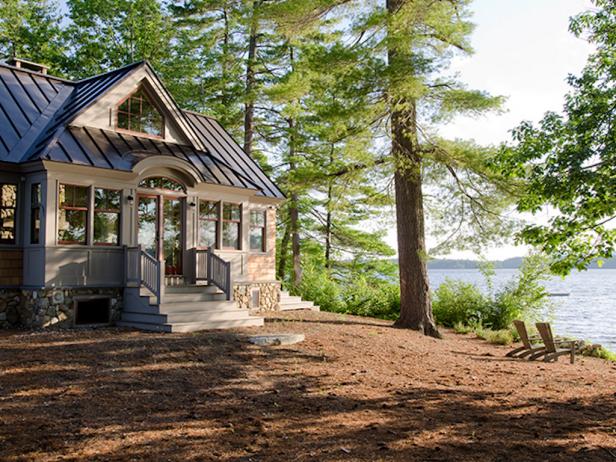
Starting with Act II, Jinx leaves the dock and wants to leave the party.   He’s looking for Tate, and goes to the lake house to find him. Not seeing him, he goes in the house, where students parade in and out.  Inside, he’s nowhere to be seen.  Students are situated around the house – it’s not a wild scene, but people are enjoying themselves.

One of the things we want to try and do with Jinx is show how he has had an effect on others, even when he doesn’t realize it.  Why do this?  Because one of the themes of this script will be that Jinx has had an impact on the lives of others, even when he can’t see it, especially in this world after the accident where he has built up this belief in his mind of how he’s now a pariah in this small Texas town.  So we’ll show small things that begin to add up as we go.

One girl, Savannah, stops Jinx, asks him where he’s going to college. University of Texas, he says.  Me, too, she responds.  She’s excited because she’ll be able to get help on her freshman history classes.  “You saved my ass on a half dozen exams junior year.” Another student with her pipes in. “Saved me too.” Jinx isn’t sure how to respond, but before he can figure it out, the girls are off to chat with someone else.

In addition, we’re going to drop in a little subtext.  In this instance, Jinx stops in front of a mantle above the fireplace, where there are various framed pictures. Several of them are of Lucas and Maggie, some with Lucas’ parents. It’s obvious the house belongs to Lucas’ family.  We finally land on one important picture:  It happens to be Jinx with four other people: one is Lucas.  The others are Ellie, Maggie and a guy we haven’t seen yet (Nick).  They look happy in the picture. Not a care in the world.  Jinx is transfixed by the picture.

From behind Jinx a voice arises: “Remember where that pic was taken?.” Jinx turns, and it’s Lucas. “San Antonio,” says Jinx.  “I remember you were surprised by how small the Alamo actually was,” replies Lucas.  Jinx agrees. “I imagined it being larger than life.”  Lucas follows up with: “I miss hanging out with you.  Let’s get together this summer, okay?” Jinx mumbles a half-hearted, “sure.”

The subtext, of course, is that we tend to make things bigger than they tend to be, and in particular, Jinx has made the accident bigger in his mind than it is in others. But Jinx of course can’t see that — yet.

We need to bring Hunter back for another appearance to offset the good feelings we just got from Jinx and Lucas.  So Lucas leaves the house and runs into Hunter and his goons. There is an argument over whose side Lucas is on.  Lucas makes it clear where he stands and moves on. Hunter mentions to his guys to watch out for Lucas.  He might get in the way of their plans, and if they have to, they’ll take care of him as well.

We’ll continue working on this and post the next part of our outline (and other random thoughts) soon.  In addition, because of some of you may want to see the continuing outline as we go so we’ll create a page that has our progress.  If there is anything else you’d like to see, please let us know!

Getting into Subtext with our Script

A good script is going to have a lot of layers to it, in other words, it’s not just A, then B, then C, then D.  That results in a pretty thin script.  One of the best ways to add subtlety to your script and build unique characters is by adding subtext.  As we’re building our outline, Rick and I are always looking for ways to add subtext to the story.

What is subtext you ask? It’s really just an underlying or deftly hidden action by a character.  Rick is a master of the subtext, and I’ll let him explain his thinking on the subject:

If there was a strength or skill to consistently work on as you ply your craft as a screenwriter, I’d recommend it be adding subtext to each of your scenes. It makes movies so much more impactful when you’re watching them and enhances your characters and story immensely. Sometimes, in ways you don’t even put together right away — I’ll offer two examples, one from an older film and one from a more contemporary film, that I use in my screenwriting workshops to illustrate:

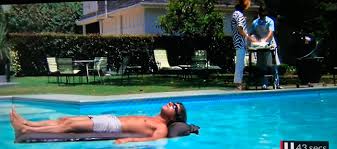
1. Think back to “The Graduate.” – There are countless examples in this film alone (Mike Nichols was a genius and you’d do well to listen, watch and learn from his incredible body of work) but I specifically love this simple example: Remember, early in the film, Dustin Hoffman has graduated college and is basically loafing at his parent’s house, unsettled and unsure of what he wants to do with his life. This frustrates his career-minded father to no end. One day, the Father comes home and his shoulders collapse upon seeing Dustin Hoffman floating on a raft in their pool, just chilling and thinking. He, of course, pleads that it’s time to ‘do something with your life’ and Dustin merely looks at him and feels very misunderstood. For me, the beautiful subtext in this scene is that it’s set for our directionless character in a pool where he’s literally drifting aimlessly. The mere visual of him ‘drifting’ enhances the message so beautifully, yet it doesn’t hit you over the head and scream: This guy’s got no direction in his life! Subtext. It adds so much. Do it in every scene.

2. Then there’s “Titanic.” — James Cameron, ’the screenwriter’ is as equally talented as James Cameron, ‘the director.’ Reading his scripts, the visuals pop and he’s very conscious of subtext in pivotal scenes. Remember, toward the end of the first half of the film, Rose’s mother is helping her dress for the Captain’s dinner and making it very clear to Rose how important it is for her to stick with the ‘money and established’ suitor she’s positioned Rose for, rather than that impulsive bad boy Leonardo something-or-other. As she’s basically telling Rose what to do, what is Rose’s mother actually doing? Tightening her corset. She literally pulling the strings and tightening the pressure on Rose to her specifications. Rose is visibly uncomfortable yet her mother tightens and adds pressure. Again, it’s all very natural and organic because someone has to do it but the subtext of having Rose’s mother communicate her wishes this way, enhances the message, her character and the take-away from the scene exponentially.

Re-watch any of your favorite movies. There’s probably countless examples, some of which you may have missed on the first few watchings. Good subtext is often that — submerged in the words and actions of the very natural. Get good at it and screenwriters of the future will be citing examples from your scripts to screenwriters learning the craft. It’s a universal strength and powerful tool to make your scripts engaging on multiple levels.

Thanks to Rick for this valuable insight!  We’ll be back soon with more work on our outline!

Outline Distress

I can’t imagine there isn’t someone reading this who hasn’t felt the despair of sitting down and crafting out an outline, but then hitting a mental roadblock.  You’re trying to crank out the next five plot points, but it’s just not happening.  The characters are doing the same things, the plot seems stuck in place, you’re continually looking to see what the score is on the game or what Kim and Khloe are up to (EDITOR’S NOTE: Gary DOES NOT, in any way shape or form, watch “Keeping up with the Kardashians”  Gary cannot speak for Rick’s viewing tastes).

I spent yesterday doing everything except focusing on the outline.  I needed to do that to clear my head and try to find fresh direction for the characters and for the plot.  At times you can be too driven to finish your outline, perhaps because of some self-imposed deadline, and what you’re putting on the page is essentially dreck.  When you become overly obsessed with your writing, you get self-obsessed characters and overly convoluted plots. When that happens, take a day off and see if that helps get you back on track with more focus and energy.  If that doesn’t work, maybe it’s not you that’s the problem. Maybe it’s your characters and plot that are holding you back. Sometimes the hardest thing to do is let go of this world you’ve built in your head, but maybe getting them out of your head will clear up some place for new, more exciting characters and stories to tell.

I returned to our outline today, and found myself writing with a renewed sense of purpose after spending some time NOT thinking about the outline at all.  Let’s see if it helps.

When we last left our protagonist, Jinx, he was getting dressed down by Ellie for claiming he was leaving the small town he grew up in and deserting the family business.  After their argument, Ellie leaves.We need to leave the two hanging, because settling an argument easily doesn’t make for great drama.  You want that cloud hanging over them until sometime later, when they can either resolve their situation, one way or the other.  Is there an additional way to create a roadblock between them?

There are several options available.  A good one is to create a “distraction character” who may prevent him from hinder him from achieving a goal, even if it’s an unstated one.

In the case, we’ve going to introduce Cassie, a mysterious and attractive fellow student.  Jinx walks down to the dock and sits down and stares into the water, reflective. Cassie comes over, sits  next to him and tries to engage in a conversation.  Jinx has some hesitation – he didn’t expect this.  He talks about the lake and how it’s been a big part of his life, but now he looks at it, and all he sees is regret — hence, the name of the movie. Cassie offers some words of encouragement, and maybe even some words of advice.

sitting_dock_ocean-7371

And then there is an awkward silence, but the silence is broken by several girls running past them and jumping in the water.  Cassie jumps in with them, and gives Jinx a look as if to say: “are you going to join us?”  Jinx hesitates, and she’s off to join the girls.

An additional dilemma is now presented to Jinx:  should he pursue Cassie?  Giving the protagonist a moral conundrum tends to make for good drama — if handled correctly.

We’re now ready to close out Act I, but we need something that gets us honed in on what’s to come in Act II, and we find it in our old pal Hunter.  We land on him talking to other students about Jinxn about how it’s time to set things right for what happened a year ago.  It’s apparent that revenge is on their minds, and the die is now cast for our protagonist.

We’ll delve into Act II soon — I’m heading to the great city of Austin, Texas for a wedding, but we’ll add more of the outline shortly.  If you have comments or suggestions about how the outline is going so far, feel free to leave a comment below.  We’ll soon have a page dedicated to the outline in full so you can see how the outline looks in real time, and get an understanding of how we actively outline.

A Note About Our Screenplays (and writing)

We’ll get back to the screenplay outlining quickly, but just wanted to let everyone know that we’re going to start posting some of our screenplays on this site for you to peruse (and if you’re a producer, to option!).  You can see just a few of these screenplays using the link at the top of the page, or you can get there from here.

Note that for now, we’re focused on low budget scripts as a way to get produced, and that has worked in several cases (and maybe something you should consider as well, if you’re a beginning screenwriter, or maybe even a seasoned one).  Why is this?  Well, first of all, writing spec scripts, is just that, speculative.  VERY speculative.  To get through the front gates of the big production companies, you need to have been produced before (and consequently represented), or have an insanely great script.

Yet having an insanely great script still doesn’t guarantee anything.  You have to still get someone to read it, and that requires getting noticed.  Query letters almost NEVER work.  If you’re the less than 1% who got yours through the door, congrats.  The other 99% applaud and cry in their beers in between typing out another five pages of Act Two.

That’s why I’m a big proponent of Simply Scripts, which I find to be one of the best ways to get discovered as a writer.  I placed several scripts on that site and have been optioned four times.  There are a lot of other writers from that site as well who have similar success stories.  Do yourself a favor, if you’re a screenwriter, and hit that site up.  And if you’re a writer who frequents Simply Scripts and want to chime in on your success there, feel free to leave a comment below.  This is an encouraging, peer-review site that can provide you with a ton of reviews and resources to help you get better as a writer.

Good luck!